The Transformative Value of a Structured Fishing Log
For many, fishing is a pursuit of quiet moments and sudden excitement, a hobby rooted in tradition and personal experience. Yet, beneath the surface of this relaxing activity lies a wealth of data and patterns waiting to be captured. The transition from casual recollection to systematic recording marks a significant evolution for any angler. A dedicated fishing log book transforms sporadic memories into a powerful, actionable journal. When that log book is built upon a professionally designed foundation, such as the Fishing Log Book – KDP Interior, its utility expands beyond personal use into the realm of publishing and business.
From Memory to Method: The Core Purpose of Logging
Imagine recalling a perfect day on the water: the location, the weather, the lure that seemed irresistible to the bass. Months later, returning to the same spot under similar conditions, you might struggle to remember the exact details that led to success. A fishing log serves as an external memory, capturing specifics that internal recollection often glosses over. This systematic approach shifts fishing from pure intuition to informed strategy.
Key observations typically recorded include:
- Date and Time: Tracking seasonal and diurnal patterns.
- Location and Specific Spot: Notes on water body, access points, and underwater features.
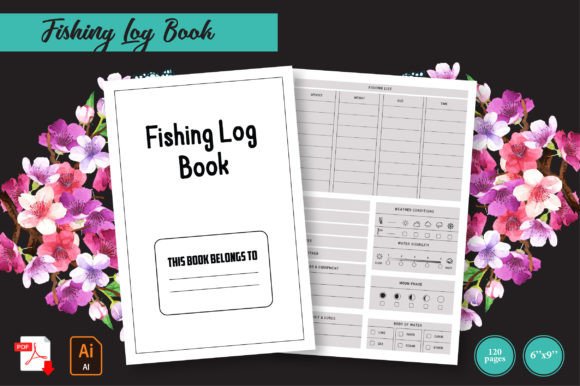
- Weather Conditions: Air temperature, wind direction and speed, cloud cover, and barometric pressure.
- Water Conditions: Water temperature, clarity, and current flow.
- Techniques and Gear: Lures, baits, rods, reels, line used, and presentation methods.
- Results: Species caught, size, quantity, and notable misses.
By consistently logging these variables, anglers begin to see correlations. Perhaps a specific spinnerbait works best in cloudy, post-rain conditions on a particular lake. Maybe the walleye are consistently deeper in midday summer heat. This data-driven methodology enhances efficiency, increases success rates, and deepens the understanding of aquatic ecosystems and fish behavior.
The Professional Framework: KDP Interior Designs
While any notebook can serve as a log, a purpose-built structure elevates the practice. A layout designed specifically for fishing ensures all relevant data points have a designated place, preventing omission and encouraging consistency. The Fishing Log Book – KDP Interior represents this specialized approach, offering a pre-formatted, optimized template. Its design considerations go beyond simple fields for date and catch; it anticipates the needs of the logging angler, organizing information for both easy entry and later analysis.
Such an interior is crafted for dual utility. Primarily, it functions as an excellent personal log book when printed. Secondly, it serves as a ready-to-use product foundation for creators on platforms like Amazon Kindle Direct Publishing (KDP). The 6x9 inch dimension is a popular and practical size for paperback books, comfortable to hold and easy to pack. A 120-page count provides ample space for a season's or even a year's records without being unwieldy.
Applications Beyond the Individual Angler
The value of a well-structured fishing log book extends into several broader contexts. Educators teaching outdoor skills, biology, or data collection can utilize such logs as practical student projects. Researchers conducting informal citizen science or habitat studies can standardize data gathering using a uniform template. Fishing guides and charter operations can use logs to refine their service offerings, documenting successful trips for client reference and operational improvement.
For the business-minded creator, this is where the downloadable interior becomes a key asset. The KDP marketplace hosts a vast array of low-content and mid-content books, such as journals, logbooks, and planners. These products cater to niche interests and are sought after by enthusiasts looking for tools tailored to their hobbies. A fishing log book fills a specific need within this market.
Building a Publishing Asset with Optimized Interiors
Entering the KDP space with a unique product requires more than just an idea; it requires a professionally executable format. The specifications of the Fishing Log Book – KDP Interior address the practical needs of publishers. The provision of file formats like JPEG, PDF, and editable Adobe Illustrator files offers flexibility. Whether a publisher wishes to use the design as-is, make minor adjustments, or incorporate it into a larger compilation, the editable nature of the files supports customization.
The assurance of thorough formatting and testing is critical. An interior that is not properly aligned, has inconsistent page margins, or features unclear printing boundaries can result in a poor-quality physical book, leading to customer dissatisfaction. A meticulously crafted interior mitigates these risks, allowing the publisher to focus on marketing and distribution rather than troubleshooting design errors. The "bleed not applicable" specification simplifies the printing process for standard interior pages without full-color edge designs.
By leveraging such a ready-made, optimized interior, a creator can rapidly deploy a product that meets market expectations for quality and functionality. This accelerates the path from concept to commerce, unlocking opportunities in the niche publishing business without requiring advanced graphic design skills.
Characteristics of an Effective Fishing Log Design
What separates a generic journal from a high-efficacy fishing log? The design must balance comprehensiveness with usability. Overly complex pages can deter regular use, while overly simplistic ones may omit crucial data. An effective design, like the one embodied in the referenced KDP interior, typically exhibits these characteristics:
- Logical Sectioning: Grouping related information (e.g., all environmental conditions together) for intuitive entry.
- Space for Notes: Including open areas for unique observations, sketches of lake sections, or details about unusual catches.
- Seasonal Tracking: A structure that accommodates year-over-year comparison, perhaps through an index or summary pages.
- Durable Layout: A clean, readable format that remains functional even after hundreds of entries.
- Print-Ready Optimization: Ensuring all text and lines are clear, fonts are legible, and pages are sequentially ordered for professional binding.
These characteristics ensure the log is a joy to use, not a chore. This user experience is paramount, whether for the solitary angler or the end customer of a published KDP book.
Real-World Relevance and Growth Potential
The practical understanding here is twofold. For the fishing enthusiast, adopting a structured log is a direct investment in improving their craft and enriching their experience. The act of logging itself often increases mindfulness and engagement during fishing trips. For the entrepreneur or creator, understanding the demand for niche tools like fishing log books reveals a viable business pathway.
The KDP model, particularly for low-content and mid-content books, allows for scalability. Once a single interior design, such as the Fishing Log Book – KDP Interior, is acquired and understood, it can serve as a model for other niche log books—hunting, gardening, bird watching, etc. This leverages the initial learning and investment across multiple products, fostering business growth.
Furthermore, the digital and editable nature of such assets provides long-term value. As trends change or new data points become relevant to anglers (e.g., water pH measurements), the interior can be adapted, keeping the product line fresh and responsive to community needs.
Considerations for Users and Publishers
Whether planning to use a fishing log for personal mastery or as a published product, certain considerations apply. Personal users should commit to consistency; the log's value compounds with regular entries. They might also consider pairing the physical log with digital photos, storing images of catches and locations separately to create a richer archive.
Publishers must conduct market research to understand competitive offerings and pricing within the fishing and outdoor journal categories on KDP. They should also familiarize themselves with KDP's guidelines for paperback publishing, cover creation, and keyword optimization. The quality of the interior design is a core component, but successful sales also depend on an attractive cover, a compelling description, and appropriate categorization. The downloadable Fishing Log Book – KDP Interior provides a robust starting point for the interior, allowing the publisher to allocate resources to these other critical elements.
In both cases, the underlying principle is the recognition of structure's power. A fishing log book is more than pages; it's a system. A KDP interior is more than a template; it's a validated tool for product creation. When these two concepts converge, they create opportunities for enhanced personal practice and viable creative business, both flowing from the same foundational design optimized for the simple, profound act of recording a day on the water.