The Transformative Power of Editable Templates: Unpacking the KDP Interiors Bundle
In the bustling ecosystem of self-publishing, efficiency and quality are paramount. For authors and entrepreneurs venturing into the world of Kindle Direct Publishing (KDP), particularly in the realm of low and no-content books, the creation of interior layouts can be a significant hurdle. This is where specialized digital products, such as the Editable 10 KDP Interiors Bundle and its companion Planner KDP Interior, emerge as pivotal tools. These bundles represent not just a collection of files, but a streamlined approach to professional book creation.
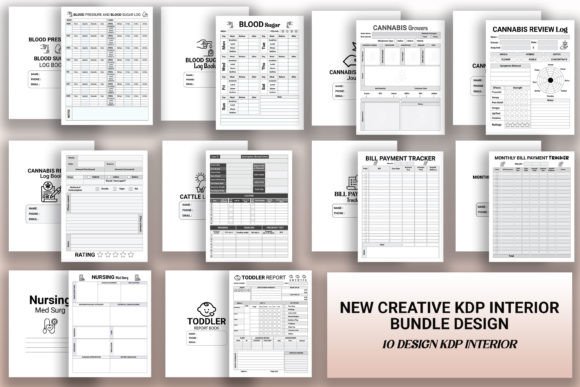
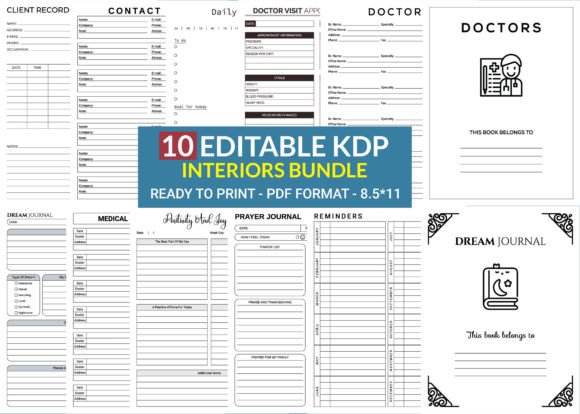
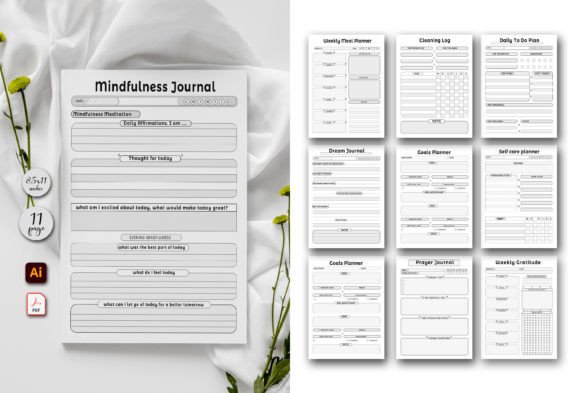
At its core, the concept revolves around pre-designed, customizable templates. Each bundle typically contains ten distinct interior designs, formatted and tested explicitly for KDP's upload requirements. The standard dimensions are 8.5" x 11" inches, a common size for journals and planners, and each set comprises ten pages. The file formats—JPEG, PDF, and editable AI files—offer flexibility for users with varying levels of technical expertise. The editable AI files, accessible through software like Adobe Illustrator, provide the deepest level of customization, allowing creators to alter colors, fonts, and layouts to match their unique brand or vision.
A Deep Dive into the Bundle's Components
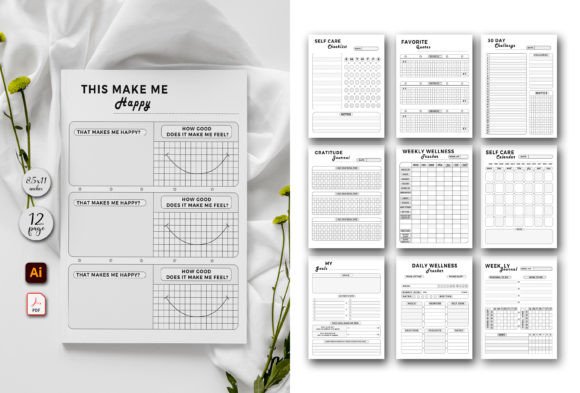
The specification list reveals the bundle's practical orientation towards personal development and daily organization. It includes dedicated pages for a "Belongs To" section, a Weekly Gratitude Prayer Journal, NOTES sections, a Mindfulness Journal, a Self-care planner, a Goals Planner, a Dream Journal, a Daily To Do Plan, a Cleaning Log, and a Weekly Meal Planner. This variety addresses multiple niches within the popular low-content book market. Each component is designed to serve a specific user need, from fostering mental well-being through gratitude journaling to practical household management with cleaning and meal logs.
The inclusion of a "Belongs To" page is a subtle yet important touch, personalizing the journal for the end-user. The combination of spiritual (Prayer Journal), introspective (Mindfulness Journal, Dream Journal), and pragmatic (To Do Plan, Cleaning Log, Meal Planner) elements creates a versatile product that can appeal to a wide audience. This thoughtful curation demonstrates an understanding of market trends where readers seek tools that blend self-improvement with practical life management.
The Core Advantage: Customization and Ready-to-Use Design
The most prominent characteristic of this Editable 10 KDP Interiors Bundle is its dual nature: it is both 100% formatted for immediate use and 100% customizable. This addresses two common pain points for KDP publishers. First, the testing for KDP ensures compatibility, eliminating the technical anxiety of upload errors related to margins, bleed, or file type. A creator can confidently upload the PDF or JPEG versions without modification. Second, the editable aspect empowers those who wish to differentiate their product. In a market where visual uniqueness can impact sales, the ability to modify every element is a significant advantage.
For business owners focusing on the low or no-content model, time is a critical resource. Designing ten professional interiors from scratch requires considerable skill and hours. This bundle effectively compresses that timeline, allowing the entrepreneur to focus on marketing, scaling, and publishing strategy rather than graphic design. The return on investment is measured in accelerated production cycles and the ability to quickly test multiple book concepts across different planner niches.
Real-World Applications and User Scenarios
The utility of these bundles extends across various user profiles. A hobbyist interested in journaling might purchase the bundle to create a personalized gift for friends, editing the colors to suit individual preferences. An educator could adapt the templates for classroom materials, such as student goal-setting journals or weekly assignment planners, using the editable files to add instructional text or school logos. Researchers studying habit formation or mindfulness practices might use the structure of these templates as a basis for designing specialized data collection journals for study participants.
For the core audience of KDP business owners, the application is direct. They can use the unedited versions to rapidly populate their KDP catalog with a series of themed journals—launching a gratitude journal, a meal planner, and a cleaning log simultaneously to capture different segments of the lifestyle market. Alternatively, a more brand-focused creator might use the AI files to create a cohesive series where every journal shares a distinct color palette and typography, building recognizable brand assets. This flexibility supports both broad and niche marketing strategies.
Considerations for Potential Users
While the benefits are clear, effective use of such a bundle requires some considerations. Access to design software like Adobe Illustrator is necessary for full customization of the AI files. Users without this access can still customize by overlaying elements in other programs using the PDF or JPEG as a base, but this is more limited. Understanding KDP's own formatting guidelines remains essential, even with pre-tested files, to ensure final outputs meet all policy requirements for trim size and resolution.
Furthermore, the success of a low-content book on KDP often hinges on keywords, cover design, and description, not just the interior. The bundle solves the interior design challenge, but it is part of a larger workflow. Savvy users will pair these professional interiors with equally professional cover designs and meticulous market research to create a competitive product. The bundle is a powerful component, not a standalone solution.
Workflow Integration and Publishing Efficiency
Integrating the Editable 10 KDP Interiors Bundle into a publishing workflow can dramatically streamline operations. A typical process might begin with selecting the appropriate template from the bundle for the book's theme—choosing the Goals Planner for a productivity journal, for example. The user then either uses the ready-made PDF or opens the AI file to insert their brand name on the "Belongs To" page, adjust colors, or add minor graphical elements. After customization, the file is exported as a high-resolution PDF or JPEG, following the bundle's included specifications.
The next steps involve the standard KDP process: crafting a compelling book title and description, designing or purchasing a matching cover, setting pricing, and selecting relevant categories and keywords. Because the interior is already prepared, this workflow allows for batch creation. A publisher could prepare all ten interiors from the bundle, pair each with a cover, and upload them as ten distinct book listings in a focused campaign, building a comprehensive presence in the planner journal category.
This efficiency also facilitates iterative testing. A publisher can quickly launch a version of the Mindfulness Journal, analyze its performance, and then use the editable files to create a revised version based on customer feedback or observed trends, such as adding more writing space or changing the prompt layout. The bundle supports both rapid deployment and agile refinement.
The Broader Context: Trends in Digital Publishing Tools
The availability of products like the Editable 10 KDP Interiors Bundle reflects a larger trend in digital entrepreneurship: the move towards modular, asset-based business models. Instead of each creator reinventing basic components, they can leverage professionally created assets to build their unique offerings. This parallels trends in web design with theme templates, in video with stock footage, and in music with production loops. It democratizes quality and allows entrepreneurs to compete on ideas and marketing rather than on deep expertise in every underlying technical discipline.
Within the KDP ecosystem specifically, the demand for such editable bundles is driven by the explosive growth of the low-content book segment. Readers seek affordable, functional tools for organization and self-care, and publishers seek efficient ways to meet that demand. These bundles sit at the intersection, providing the bridge between market need and scalable supply. Their design, focusing on tested formats and key lifestyle themes like gratitude, self-care, and meal planning, is a direct response to observable consumer interests.
Ultimately, tools like the Editable 10 KDP Interiors Bundle and the Planner KDP Interior are more than just digital downloads. They are workflow accelerants that encapsulate professional design standards. They enable a diverse range of users—from aspiring authors to established business owners—to participate in the self-publishing economy with a lower barrier to entry regarding design. By offering both rigidity for reliability and flexibility for creativity, they embody a practical solution for modern digital publishing challenges, highlighting how structured resources can empower individual creativity and commercial enterprise.