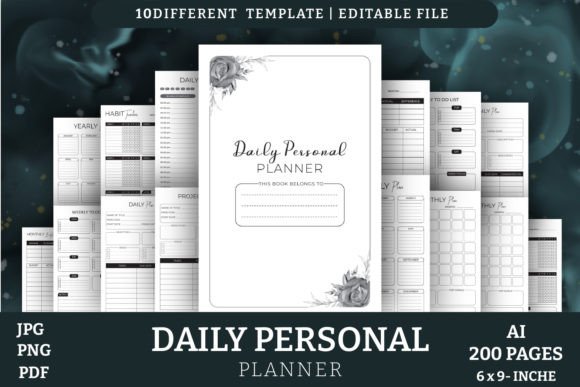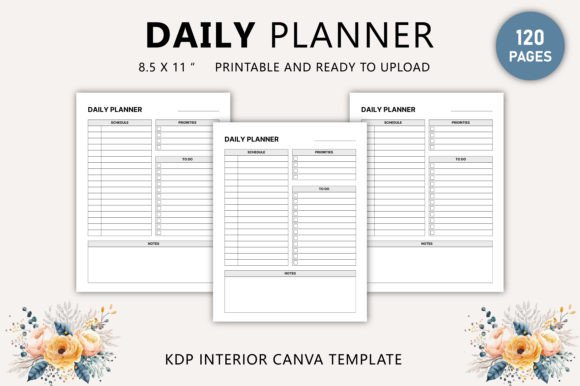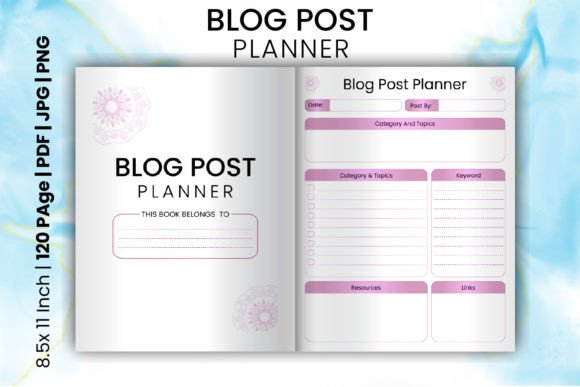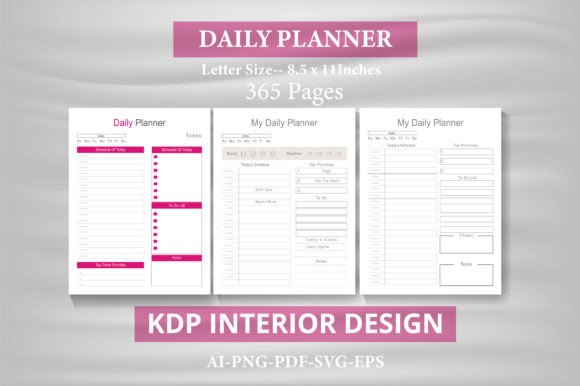
What Are Daily Planner KDP Interiors?
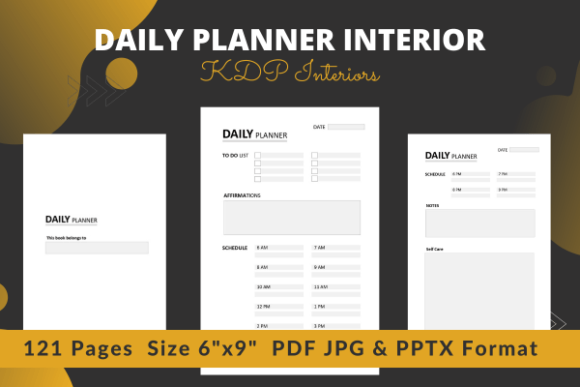
For authors and entrepreneurs entering the self-publishing space, particularly through Amazon's Kindle Direct Publishing (KDP) platform, the term Daily Planner KDP Interiors refers to pre-designed, formatted template files. These templates are specifically crafted to serve as the interior pages of a daily planner book. They are sold as digital products, typically including PDF, JPG, and sometimes editable PPTX files, ready for upload to KDP. A common specification for these products is a 6x9 inch dimension, 121 pages, with no bleed, indicating they are designed for standard paperback interiors without full-color edge printing.
The core value of Daily Planner KDP Interiors lies in their readiness. They are marketed as 100% formatted and tested, meaning the seller has ensured the file meets KDP's technical requirements for upload. This eliminates the need for the buyer to design page layouts, set margins, create daily entry sections, or handle complex formatting from scratch. It is crucial to understand these are interior files only; the purchaser must create or source a separate cover file to complete the paperback book.
Key Reasons for Interest in Daily Planner KDP Interiors
Several factors drive individuals to consider purchasing a Daily Planner KDP Interior template. Primarily, it addresses a significant barrier: technical design skill and time investment. Creating a professionally laid-out planner interior requires knowledge of typography, page balance, and KDP's precise file specifications. A pre-made interior bypasses this learning curve.
Another reason is speed to market. For those looking to publish a planner quickly, perhaps to capitalize on a seasonal trend or to test a niche, using a ready-made Daily Planner KDP Interiors template can drastically reduce the development timeline. Instead of weeks of design work, the focus shifts to minor customization and cover creation.
Cost efficiency is also a consideration. While there is an upfront cost to purchase the template, it is often lower than hiring a professional graphic designer to create a unique interior from scratch. This makes it an attractive option for newcomers with limited budgets or those running a series of low-risk publishing experiments.
Benefits and Practical Expectations
The primary benefit of using a Daily Planner KDP Interiors file is convenience and assurance. The files are described as high-resolution and print-ready, which should translate to a smooth upload process and a professional-looking final product. Having 121 pages pre-organized with daily planning sections (typically for 100 days) provides a solid, structured foundation.
However, there are important tradeoffs and considerations. The most significant tradeoff is originality. While the interior is professionally formatted, its design is not unique. Other publishers may use the same or similar templates, potentially making your planner less distinctive in a crowded market. Your book's uniqueness will hinge almost entirely on your cover design and branding.
A key expectation to set is regarding "editable" files. The mention of 100 editable pages and PPTX files suggests some level of customization is possible. In practice, this often means you can add your own text or logos to certain areas, or adjust minor elements within a software like PowerPoint. However, major structural redesigns are usually not feasible. You are working within the confines of the template's framework.
Situations Where Daily Planner KDP Interiors Are a Strong Fit
These template products align well with specific goals and scenarios. They are an excellent fit for first-time KDP publishers who want to understand the publishing process without the intimidation of full-scale design. Using a tested Daily Planner KDP Interiors file allows them to learn about file upload, cover pairing, and listing creation on a stable foundation.
They are also a strong match for entrepreneurs focused on rapid portfolio building. If the business strategy involves publishing multiple planners across different themes (e.g., fitness, student, productivity) using a consistent, reliable interior template can streamline production. The core interior remains the same, while covers and titles are varied to target different niches.
Additionally, for individuals whose strength lies in marketing or content ideas rather than graphic design, leveraging a professional Daily Planner KDP Interiors template allows them to play to their strengths. They can concentrate on crafting compelling book titles, covers, and sales copy, while relying on the template for interior quality.
When Alternatives Might Be Worth Considering
Despite their advantages, Daily Planner KDP Interiors are not the optimal solution for every project. If your goal is to create a highly unique, branded planner that stands out for its innovative layout or artistic design, investing in a custom-designed interior is a more appropriate path. This ensures complete control over every aesthetic and functional detail.
Similarly, if you possess intermediate-to-advanced design skills yourself, using software like Adobe InDesign or Affinity Publisher to build your own interior might yield a better return on investment. You save the cost of the template and create a truly original product, though it requires a substantial time commitment.
Another alternative exists for those with minimal design skill but who seek more customization than typical templates allow. Some services offer modular planner creation tools or more flexible template systems, though these may come at a higher cost or require a subscription.
Practical Decision-Making Insights
To determine if a Daily Planner KDP Interiors product aligns with your needs, conduct a clear self-assessment. Start by evaluating your technical proficiency. Are you comfortable adjusting a PPTX file, or would even that be a challenge? Review the seller's product description carefully: what exactly does "editable" mean, and are sample images of all 121 pages provided so you can verify the layout?
Next, define your market objectives. Is this a one-off test project, or the first of many? For a test, a template offers low commitment. For a long-term series, consider whether the generic interior will suffice across all volumes, or if it will eventually limit your brand.
Finally, perform a simple cost-benefit analysis. Compare the template price plus the cost/time for cover creation against the quote for a full custom design or the value of your own time spent learning and executing the design. Remember, the final product's success depends heavily on factors beyond the interior, like cover appeal, keyword optimization, and marketing.
In summary, Daily Planner KDP Interiors serve as a practical bridge into the planner publishing market. They offer a validated, print-ready foundation that saves time and reduces technical barriers. Their value is maximized for speed-oriented publishing, portfolio building, and for those whose skills lie outside of graphic design. However, their use entails a tradeoff in originality and design control. By carefully weighing your skill level, time constraints, and strategic goals against these factors, you can make an informed decision on whether this approach is the right tool for your KDP publishing journey.