The Movie Critics Journal – KDP Interior: A Process-Oriented Design Asset for Publishing
In the operational workflow of Kindle Direct Publishing, a well-designed interior template is a foundational component, not a final flourish. The Movie Critics Journal – KDP Interior represents a specific, production-ready asset designed to streamline the transition from concept to a physical or digital journal. Its primary function is to eliminate the repetitive, technical design work involved in creating a structured notebook, allowing creators to focus on content, marketing, and distribution. This tool fits into the broader publishing process after the initial business decision to create a low or no-content book has been made, and before the final upload and listing phases on KDP.
Integrating the Interior into a Publishing Workflow
The practical use of the Movie Critics Journal – KDP Interior typically occurs during the core production stage. Once a creator has selected their niche—in this case, a journal for film critique, review logging, or movie enthusiast notes—the next step is building the product itself. This interior provides the architectural blueprint. Instead of spending hours in design software constructing page layouts, margins, and consistent headers, a user can import the provided files directly into their project. This immediate jump from planning to a polished draft is a significant efficiency gain.
Consider a typical workflow: market research identifies a demand for movie-themed journals, a business plan is sketched, and a KDP account is established. The next actionable task is book creation. Here, the Movie Critics Journal – KDP Interior interacts directly with other key resources: the KDP platform's upload guidelines, cover design tools (which must be created separately to match the 6x9 interior dimensions), and any external software for final tweaks. The provided JPEG and PDF files are for immediate use and review; the editable Adobe Illustrator files serve as a bridge to more advanced customization tools, allowing for font changes, color adjustments, or minor layout alterations if the user has the requisite software skills.
Preparation and Compatibility Considerations
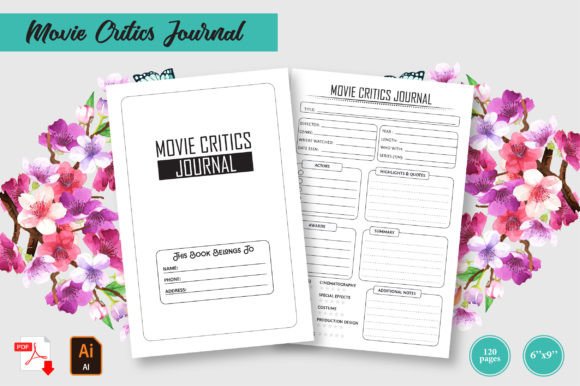
Effective integration requires some preparation. The specifications are clear: 6x9 inches, 120 pages, no bleed (indicating it's for standard interior pages, not cover design). Understanding these parameters before purchase ensures compatibility with your overall project. A common practical step is to first draft a rough content outline—even for a no-content book, you might plan for sections like "Movie Details," "Personal Rating," "Notes on Acting," etc.—and then assess how the interior's pre-formatted pages align with that structure. Its design is tailored for KDP, meaning it already adheres to Amazon's technical requirements for margins and safe zones, a critical quality control feature that prevents rejection or poor printing results.
Practical Implementation for Different User Types
The utility of this interior extends across various user profiles within the target audience. For a professional entrepreneur running a small publishing business, it acts as a reliable, tested component in a scalable production line. They can use it repeatedly for multiple titles, ensuring brand consistency across a series of movie journals. For a hobbyist or a film blogger looking to create a tangible product from their passion, it removes the technical barrier to entry. They can focus their energy on crafting a compelling cover and listing description, knowing the interior's 100% tested formatting is handled.
An educator might use this journal interior as a template for a classroom activity, customizing it via the editable files to create a structured film analysis workbook for students. Here, the tool interacts with pedagogical goals; the consistent page layout aids in organization and instruction. A freelancer offering KDP publishing services to clients could leverage this interior as a stock asset, quickly delivering a professional product base that they can then tailor to a client's specific request, greatly improving their service efficiency.
Long-Term Use and Asset Management
Viewing the Movie Critics Journal – KDP Interior as a long-term asset is a key observation. Its 100% editable and customizable nature means it is not a single-use item. After the initial journal is published, the files remain in your digital toolkit. You can adapt them for sequels, related niches (like a television series journal), or even repurpose sections for a different type of logbook by modifying titles and graphics. This reusability contributes to long-term business growth, allowing for the development of a product catalog with a cohesive internal design language, which builds customer trust and recognition.
Optimizing the Process from Download to Publication
The process after downloading the interior is straightforward but requires attention to detail. A recommended implementation sequence is: 1) Review the PDF to understand the full page flow and structure. 2) If customization is desired, use the Adobe Illustrator files with appropriate software to make changes, ensuring all layers and text are properly handled. 3) Finalize the cover design, ensuring its spine width matches the 120-page count of the interior. 4) Combine the finalized interior PDF and cover file in the KDP upload interface, following the platform's step-by-step guidance. The interior's seamless integration claim hinges on this final step working without manual adjustment—the testing ensures it does.
Usability is high because the design is meticulous and complete. There is no need to organize or assemble disparate page elements; the entire 120-page document is pre-organized. This is particularly valuable for users who prioritize consistency and professional output over experimental design. It guarantees every copy of the journal, whether printed via KDP or used for personal printing ventures, maintains identical quality and layout.
Interaction with Marketing and Business Decisions
This interior also indirectly influences pre-launch and post-launch workflows. A professionally formatted interior enhances the perceived value of the final product, which supports stronger marketing claims and more compelling listing visuals. When creating sales copy or promotional materials, you can confidently mention the book's structured, easy-to-use layout as a feature. Furthermore, the decision to use a ready-made interior can free up budget and time resources that can be reallocated to more critical business areas like advertising, market research, or developing additional products.
Ultimately, the Movie Critics Journal – KDP Interior is a process optimization tool. It fits into a clear point in the creator's journey: after the idea is validated and before the product is launched. By handling the complex, yet routine, task of interior book design, it allows individuals and businesses to execute their publishing projects with greater speed, reliability, and focus on the aspects that truly differentiate their work in the marketplace. Its value is not just in the files themselves, but in the time and confidence they provide, enabling users to move from planning to practical implementation with a trusted, integrated resource.