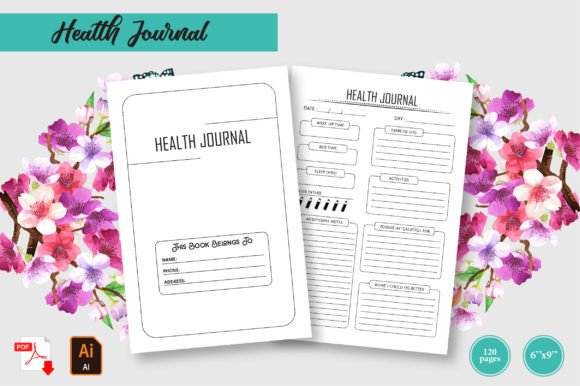
The Essential Guide to Using a Health Journal KDP Interior Effectively
If you're looking to create a health journal for Amazon KDP or personal printing, a pre-designed interior template can be a fantastic shortcut. The Health Journal – KDP Interior offers a meticulously crafted 6x9 inch, 120-page layout designed to save you time and ensure professional quality. But simply downloading a file isn’t enough to guarantee success. The real value comes from understanding how to use it correctly to avoid common pitfalls that can undermine your project.
What Is a Health Journal Interior and Why It Matters
A KDP interior is the complete inside layout of a book—all the pages, their design, and formatting. For a health journal, this includes sections for tracking meals, exercise, moods, goals, and progress. Using a professionally designed interior like the Health Journal – KDP Interior means you start with a structure that’s already optimized for readability and KDP’s printing requirements, with 100% tested formatting. This is crucial for creators, entrepreneurs, and hobbyists who want a polished product without spending weeks learning complex design software.
The Overlooked Step: Matching Content to Design
A frequent mistake is treating a template as a one-size-fits-all solution. You might download the Health Journal – KDP Interior, but if your vision for the journal is different—perhaps you focus on mental wellness rather than physical metrics—the pre-set sections might not align perfectly. This leads to a disjointed user experience. For example, a page designed for calorie counting is confusing if your journal is about meditation tracking.
Practical Correction: Before you even download, review the template's structure carefully. The editable Adobe Illustrator and PDF files included with the Health Journal – KDP Interior are your key tools. Use them to tailor the content. You can rename sections, reorganize pages, or emphasize different elements. The goal is to adapt the robust framework to your specific niche, ensuring the journal’s purpose and its interior design are in harmony.
Misunderstanding File Formats and Their Purpose
The specifications list JPEG, PDF, and editable Adobe Illustrator files. Each serves a distinct purpose, and confusion here can halt your project. Some creators assume the JPEG is the main working file, but it’s typically for preview or simple use. The PDF is often the final, print-ready version. The most powerful asset is the editable Adobe Illustrator (.ai) file, which allows for deep customization.
How this affects results: If you try to edit a JPEG or a flattened PDF, you’ll struggle with quality loss and rigid elements. You might end up with a journal that looks amateurish or has misaligned text. The better approach is to use the Illustrator file with appropriate software (like Adobe Illustrator or compatible free alternatives) for any changes to layout, fonts, or graphics. Then, export a high-quality PDF for uploading to KDP. This preserves the meticulous craftsmanship of the original Health Journal – KDP Interior.
The "Bleed Not Applicable" Clarification
The specification “Bleed Not Applicable” is important but often glossed over. Bleed refers to design elements that extend beyond the page edge to prevent unwanted white borders after trimming. For a simple interior like a journal, which typically uses clean margins and doesn’t have full-page background images, bleed isn’t necessary. Attempting to add one or worrying about its absence can complicate your process unnecessarily. Trust that this design has been tested for the 6x9 inch format without bleed.
Avoiding the Quality Assurance Blind Spot
Even with a 100% tested template, skipping your own final review is a critical error. Common oversights include:
- Font Consistency: If you add text in the editable files, ensure your new fonts are embedded correctly for printing.
- Page Number Accuracy: Confirm the 120-page count matches your final document after any additions or deletions.
- Image Resolution: Any personal images you insert must be high-resolution (300 DPI) to avoid blurry prints.
These details directly impact customer satisfaction. A journal with broken page numbers or low-quality graphics feels unprofessional, which can hurt reviews and sales for your KDP business.
Better approach: Create a physical proof. After customizing the Health Journal – KDP Interior and generating your PDF, use a personal printer to produce a sample copy. Physically flip through it. Check margins, spacing, and how the pen-testing areas feel. This hands-on check reveals issues a screen preview cannot.
Maximizing the "100 Editable and Customizable" Feature
The label “100% editable” is a promise of flexibility, but many users underutilize it. They change only the cover title and leave the interior mostly static. This misses an opportunity to create a truly unique product that stands out in a crowded marketplace.
Consider these realistic enhancements:
- Personalized Color Schemes: Alter the accent colors to match a specific health theme—calming blues for a sleep journal, vibrant greens for a nutrition log.
- Adding Brief Instructional Text: Include short, helpful tips on certain pages to guide the user, enhancing the journal’s value.
- Integrating Your Branding: For entrepreneurs and small business owners, subtly adding your logo or brand philosophy to the footer can strengthen brand identity.
By leveraging the editable files fully, you transform a high-quality template into a bespoke tool that better serves your audience and supports your business goals.
What to Check Before Your Final Decision
Before committing to using the Health Journal – KDP Interior, ask yourself a few key questions:
- Do I have access to, or can I learn, the software needed to edit the .ai or PDF files effectively?
- Does the 120-page count and 6x9 dimension suit my target audience’s needs (e.g., is it a 3-month or 6-month journal)?
- Am I planning to use this for KDP publishing only, or also for personal printing? The file formats provided support both, but your output process will differ.
Answering these ensures you are prepared to use the template efficiently, avoiding last-minute frustrations that delay your project launch.
Building a Better Product with a Strong Foundation
In the end, a template like the Health Journal – KDP Interior is not just a product; it’s a professional foundation. The common mistakes revolve around treating it as a finished product rather than a starting point. By understanding the specifications, respecting the different file formats, conducting your own quality checks, and embracing the full customization potential, you unlock its true value. This approach leads to a health journal that is not only well-formatted and reliable but also uniquely yours—a key factor in enhancing your KDP business or personal venture. It allows you to focus on content and marketing, confident that the interior design is optimized for performance and reader satisfaction.