Student Planner 2023-2024 KDP Interiors: Your Practical Blueprint for Academic Success
Organizing your academic life is more than just jotting down due dates. It's about creating a system that reduces stress, clarifies priorities, and transforms intention into action. The Student Planner 2023-2024 KDP Interiors is designed to be that system. Unlike a basic notebook, this planner provides structured weekly and monthly frameworks alongside specialized trackers, moving you from reactive scrambling to proactive control. If you've ever felt overwhelmed by a growing pile of assignments or missed a study session because it slipped your mind, this tool addresses the root cause: a lack of a dedicated, comprehensive planning space.
Common Mistakes When Choosing a Student Planner
Many people select a planner based on aesthetics alone, which is a common first misstep. A beautiful cover doesn't guarantee functional interior layouts that match an academic workflow. Another oversight is choosing a planner with only monthly calendars. While seeing the big picture is vital, weekly grids are the engine of daily execution. Without them, you're forced to cram daily tasks into tiny monthly boxes, losing the nuance of weekly deadlines and study blocks.
Perhaps the most significant misunderstanding is viewing a planner as merely a homework diary. True academic management involves tracking performance, logging key resources, and setting broader goals. A planner that lacks pages for grade tracking, exam schedules, or goal visualization becomes a passive tool, not an active partner in your improvement. The Student Planner 2023-2024 KDP Interiors avoids these pitfalls by integrating both macro and micro planning alongside performance analytics.
Overlooking the Power of Integrated Trackers
Let's examine a typical scenario. You have three midterms in one week. A basic planner might remind you of the dates. But with integrated sections like the Exam Schedule, Grade Tracker, and Key Terms To Remember pages, you can build a complete strategy. You can allocate study days for each subject, track your target grades, and isolate the specific vocabulary for each test on dedicated pages. This interconnected approach prevents the common mistake of fragmenting your study materials across random sticky notes and separate apps, which often leads to last-minute panic and overlooked material.
The Vision Board Page and Major Goal In College sections are also frequently underutilized in generic planners. Students often focus solely on immediate tasks, losing motivation when the workload feels endless. By visually defining your larger purpose—whether it's graduating with honors, mastering a complex subject, or securing an internship—you connect daily study sessions to a meaningful outcome. This transforms routine work into purposeful steps.
A Practical Approach to Weekly Planning
A better approach starts with the Academic Calendar and Important Dates. Before the semester begins, populate these sections from your syllabus. This creates your strategic overview. Then, each week, use the Weekly Lessons Planner not just for assignments, but for actively scheduling study time. For example, instead of writing "Read Chapter 5," block out "Tuesday, 2-4 PM: Read & annotate Chapter 5." This commits you to the action. Combine this with the Homework Tracker to maintain a running list, ensuring nothing falls off your radar. The Monthly and Yearly Planner then allows you to balance this weekly intensity by ensuring you're not overloading one month with personal commitments.
The Importance of Format and Flexibility
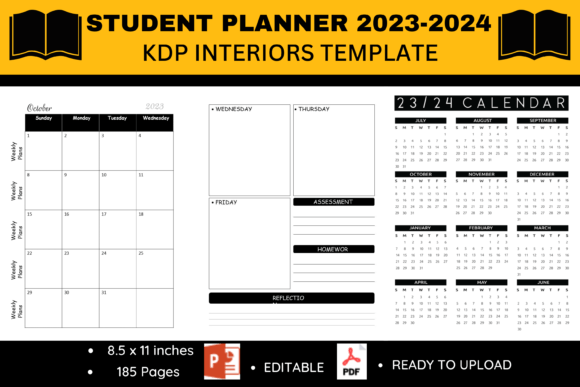
When evaluating any planner, especially a digital interior like this, check the practical specifications. The listed 11.5 x 8 inches size is optimal for ample writing space without being cumbersome. The 185-page count ensures you have enough pages for the entire academic year without running out in April. A critical detail for creators is the inclusion of both a PDF file ready to upload on KDP and a PowerPoint editable File. The common mistake here is assuming all digital planners are equally customizable.
If you purchase a static PDF alone, you cannot adjust layouts or add a personal section. The PowerPoint file empowers you to tailor the planner. Perhaps you need an additional project research page or want to change a header font. This flexibility prevents you from being locked into a structure that might not perfectly fit your unique program or learning style. Before using it, review the editable file to understand how you can make it yours.
Avoiding Disorganization in Digital Resources
Another area where students struggle is consolidating digital information. The Website Logins and Reading Assignment pages in this planner serve a corrective function. It's easy to forget passwords for library portals or course websites, wasting precious time during critical moments. Logging them in a secure, dedicated planner page centralizes access. Similarly, reading assignments often come with specific article links or PDF filenames. Recording them in the planner alongside your weekly schedule keeps the reference material physically tied to the task deadline, avoiding the mistake of having a reading list in one app and your calendar in another.
Making the Year-in-Review a Habit
The Year in Review section is a feature many might skip, but it's a powerful tool for continuous improvement. At the end of a semester or year, reflect on what worked. Did your grade improve in classes where you used the Grade Tracker diligently? Did your stress decrease when you consistently used the weekly planner? This analysis turns experience into data, helping you refine your approach for the next cycle. Without this intentional review, you risk repeating the same inefficient habits year after year, even with a good planner in hand.
Ultimately, the Student Planner 2023-2024 KDP Interiors is more than a calendar; it's a designed environment for academic success. By avoiding the common mistakes of choosing a superficial tool, fragmenting your systems, or neglecting customization options, you can leverage its full structure. Start by populating the fixed academic dates, then commit to using the weekly and trackers in an integrated way. Remember, the goal is not just to record what you have to do, but to plan when and how you will do it, thereby giving yourself the control needed to improve not just your grades, but your overall academic experience.